Military Cancer: Veterans struggle to be Compensated
By CBC Journalist
|
In the past 10 years, the Department of Veterans Affairs has received 5,888 claims for cancers allegedly related to military service. |
 |
| Veterans who have developed cancers related to their military service are denouncing an uphill battle with the Department of Veterans Affairs to be compensated. Photo: Radio-Canada / Jacques Racine |
Veterans are denouncing another fight they have to fight, this time against the
Department of Veterans Affairs. They want to be compensated for cancers that
they allege to have developed during their military service.
Marie-Eve Doucet worked for 20 years in the Canadian Armed Forces, including as a mechanic and crack technician on F18 aircraft. Now, at 44, she is battling a rare brain tumor, a pineocytoma, which she attributes to her prolonged exposure to jet fuel in closed hangars.
“It's almost impossible to prove 100 percent that it's directly due [to my work]. What I can prove is that I don't have anything in my family or a genetic mutation that can cause this.”
When she was only 34 years old, migraines and neck pain began to assail her. It was only a few years later that the diagnosis was made. Today, her cancer is stable, but neither radiation nor chemotherapy has cleared the different masses in her brain.
“You think in your twenties that you are invincible, but after careful consideration, I can see how exposed we were. How much were we in direct contact? Sometimes, the gas flowed into our gloves. We put on gloves to protect ourselves, but if they are filled with gas, it's even worse, we bathe in them.”
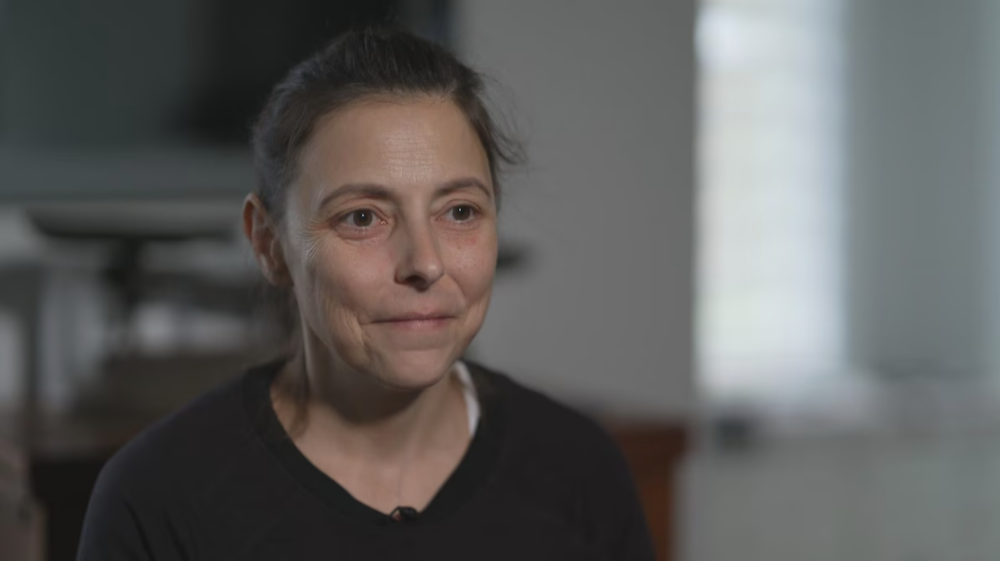 |
| Marie-Eve Doucet is 44 years old and worked for
nearly 20 years in the Canadian Armed Forces as an Aviation Technician.
Photo: Radio-Canada / Jacques Racine |
In 2021, she applied for compensation from the Department of Veterans Affairs. His initial request was denied, as was his request for review.
Last March, after four years of efforts, the Veterans Review Board finally ruled in his favour.
Marie-Eve Doucet argued that she had been exposed to a significant number of dangerous chemicals in the course of her military duties, in particular benzene, cyclohexane, trimethylbenzene, toluene, naphthalene and ethylbenzene
“The evidence clearly demonstrates that the Veteran was exposed to numerous environmental risks and circumstances that could reasonably have caused this condition. The committee concludes [...] that it is as likely that the symptoms described are related to exposure to these substances as the opposite,” the decision reads.
Marie-Eve Doucet wanted recognition of the causes of her illness, in the event that she needed more support at home. Long steps to prove her point, even though she was in the middle of treatment for her disease, she laments.
5888 applications in 10 years
Marie-Eve Doucet's case is not isolated. In the past 10 years, the Department of Veterans Affairs has received 5,888 claims for cancers allegedly related to military service.
Only 30% of these applications resulted in
favourable decisions at first instance. Among the applications denied, about
fifty files land for review and appeal to the Veterans Review Board each year.
Disability claims for cancers (excluding minor conditions)
|
January 1, 2015 to October 22, 2025 |
|
|
Number of requests |
5 888 |
|
Number of applications approved |
1 853 |
Veterans Review and Appeal Board Decisions Related to Cancers (Excluding Minor Conditions)
|
January 1, 2015 to October 23, 2025 |
|
|
Number of requests |
552 |
|
Number of favourable decisions |
266 |
Each request is examined on a case-by-case basis. The onus is on the Veteran to demonstrate that he or she has been repeatedly exposed to a hazardous material that contributed to his or her illness.
| “The
real choice is: do I fight with the ministry or do I spend quality time with my
family? This is the choice veterans must make” James Hutton, Director of Veterans with Cancer Inc. |
|
|
|
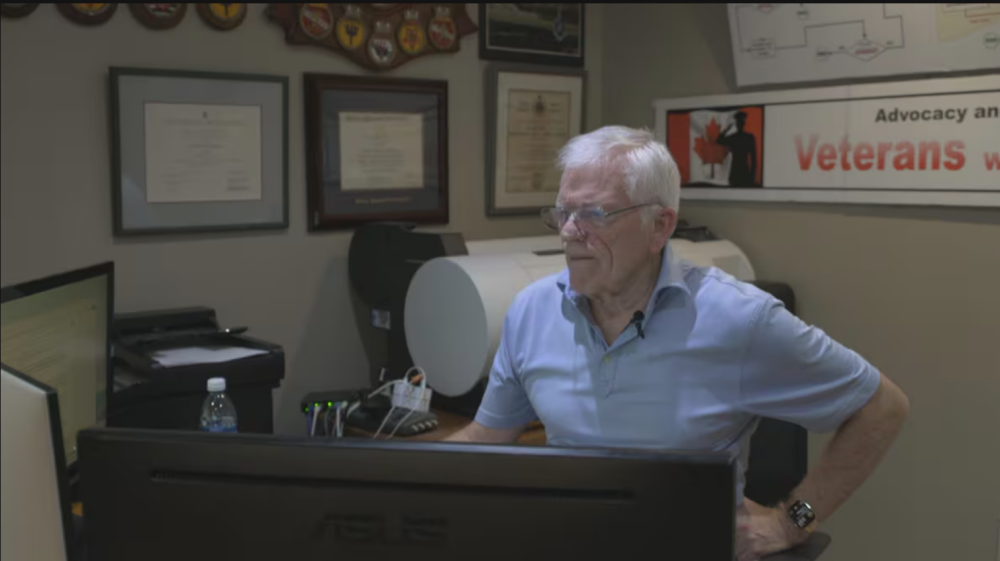
James Hutton is an activist with Veterans
with Cancer Inc. He is calling for better service from the Department of
Veterans Affairs for veterans who have been exposed to contaminants
during their careers. |
Mr. Hutton is calling for a mechanism similar to the one that
exists in the United States for veterans. Since 2022, the PACT Act has
recognized the presumption of contaminants and certain deployment locations as
risk factors for disease and promptly compensates U.S. veterans who meet these
criteria.
For example, because of burn pits, U.S. veterans deployed after 9/11 to Afghanistan or Iraq who developed one of the twelve cancers listed do not have to demonstrate proof of causation in their claim.
Difficulty in establishing causal links in the workplace
“It's difficult to say whether a cancer cell is associated with work or not because there may be cancer but 10 different causes of the same cancer”, explains France Labrèche, a professor at the School of Public Health at the University of Montreal. Her research focuses on occupational cancers.
It's difficult to get a clear picture of the number of occupational cancers in the Canadian population, but their number is underestimated, she believes.
|
“Sometimes,
cancer appears 10 years or 20 years after retirement. Therefore, the worker no
longer works. If they are very sick, they do not want to go through the
administrative procedures to be compensated”.
France Labrèche, Professor at the School of Public Health at the Université de Montréal |
The recognition of occupational cancers varies according to legislation. For example, in Quebec, the CNESST has a specific list of cancers that it recognizes for firefighters as well as for certain professions exposed to asbestos.
|
|
|
France Labrèche is a professor in the Department of Environmental and Occupational Health at the School of Public Health at the Université de Montréal. Photo: Radio-Canada / Dave St-Amant |
Causal links are easier to establish for “old contaminants” for which toxicological data are more complete, adds Sébastien Sauvé, professor of environmental chemistry at the University of Montreal. These relationships remain complex for emerging contaminants such as PFAS or for exhibitions in environments like machine shops or warehouses.
Unlike water or soil samples, “measuring air quality is probably the poor child in all these measurements”, adds Sébastien Sauvé.
In addition, different contaminants can interact with each other, a phenomenon called the cocktail effect, which is difficult to measure but increases the risks, even at low doses.
| Military Cancer: Veterans Struggle to Be Compensated by CBC Journalist Marie-Isabelle Rochon - View Original CBC Production |
No presumptive decisions for veterans with cancer
Each year, cancer cases account for less than 1 per cent of all claims at Veterans Affairs, but these are “more complicated” cases, says Steven Harris, senior assistant deputy minister of service delivery at Veterans Affairs Canada.
A reference guide exists to guide decision-makers, which sometimes helps to speed up the compensation process. Among other things, it lists the types of cancers related to exposure to Agent Orange, asbestos, benzene or mustard gas. Rare cases, such as that of Marie-Eve Doucet, are not listed in this guide.
|
“We do not have the right to
make an automated decision. Each case must be reviewed individually to ensure
that the facts are established.” Steven Harris, Senior Assistant Deputy Minister of Service Delivery at Veterans Affairs Canada |
Veterans Affairs Minister Jill McKnight was not available for an interview. In response to our questions, his department said it is closely following U.S. research on occupational exposure in the military, including work that supports the Promise to Address Comprehensive Toxics Act (PACT) and its presumptive decision models.
The ministry adds that decision-makers are provided with guidance based on medical research, allowing them to make connections between certain trades or service experiences and the development of certain disabilities.
Veterans Affairs Minister Jill McKnight was not available for an interview. In response to our questions, her department said, “It is closely following U.S. research on occupational exposure in the military, including work that supports the Promise to Address Comprehensive Toxics Act (PACT) and its presumptive decision models.”
The ministry
adds that, “decision-makers are provided with guidance
based on medical research, allowing them to make connections between certain
trades or service experiences and the development of certain disabilities.”
Read also:
In Defence of the Veterans Review and Appeal Board - rebuttal of the CBC Article
A patient will have to pay an average of $33,000 in Canada to fight cancer